Quercus nuttalli
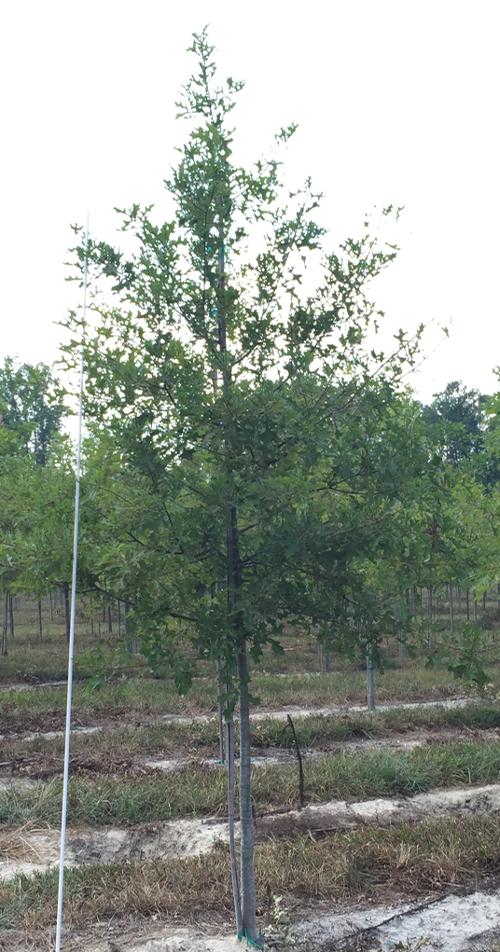
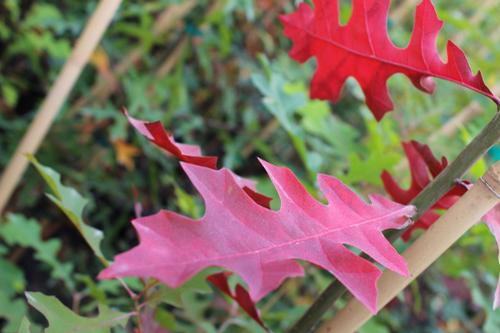
Nuttall oak is a beautiful, large, shade tree with a spreading crown that rounds out at maturity. The 4-8" long deciduous leaves are deeply lobed and have bristles on the tips of some lobes. Foliage is dark green during most of the year, turning brilliant red to red-orange in fall and into winter.
Acorns are eaten by woodpeckers, wild turkey, other birds, as well as small and large mammals. Male catkins produce pollen. The trees provide nest sites for birds and pollen for pollinators.
Considered the southern version of Q. palustris and Q. shumardii, Nuttall oak is a great tree for naturalizing in clay soils that do not drain so well.
- Native shade tree
- Rich reddish new growth
- Develops full canopy at an early age
- Category:
Tree,
Native
- Hardiness Zone: 5-9
- Height: 40-70 ft
- Spread: 40-60 ft
- Foliage Color:
Green
Login for pricing