Quercus coccinea
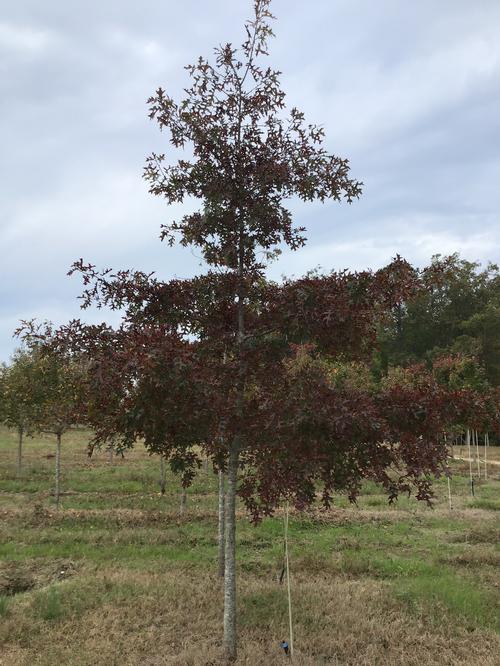
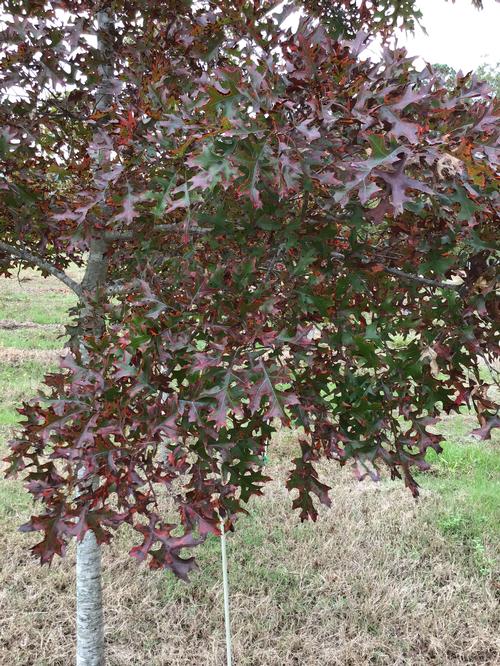
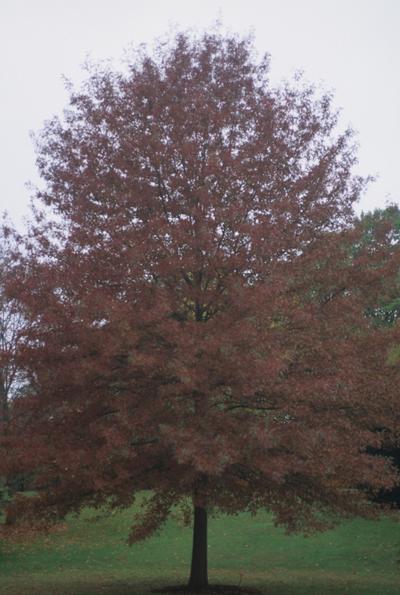
Scarlet oak is a popular tree with spectacular fall color. Leaves are a dark, glossy green color, changing to red in the fall. Scarlet Oak and Pin Oak are frequently confused. The scarlet oak has lobed leaves that form a C-shape, and the acorn cap is a deep bowl shape. The pin oak, however, has U-shaped lobed leaves and a thin cap cover. The bark is dark brown and has fine fissures and scaly ridges. The stems are reddish-brown and smooth.
The tree is an important source of food for many wildlife species including woodpeckers, wild turkey, other birds, and small and large mammals. For an oak, it grows fast and bears acorns in 20 years.
It will add interest to the landscape if used as a specimen or shade tree.
- Native shade tree
- Broad, rounded habit
- Vibrant red fall color
- Category:
Tree,
Native
- Hardiness Zone: 4-9
- Height: 50-80 ft
- Spread: 40-60 ft
- Foliage Color:
Green
Login for pricing